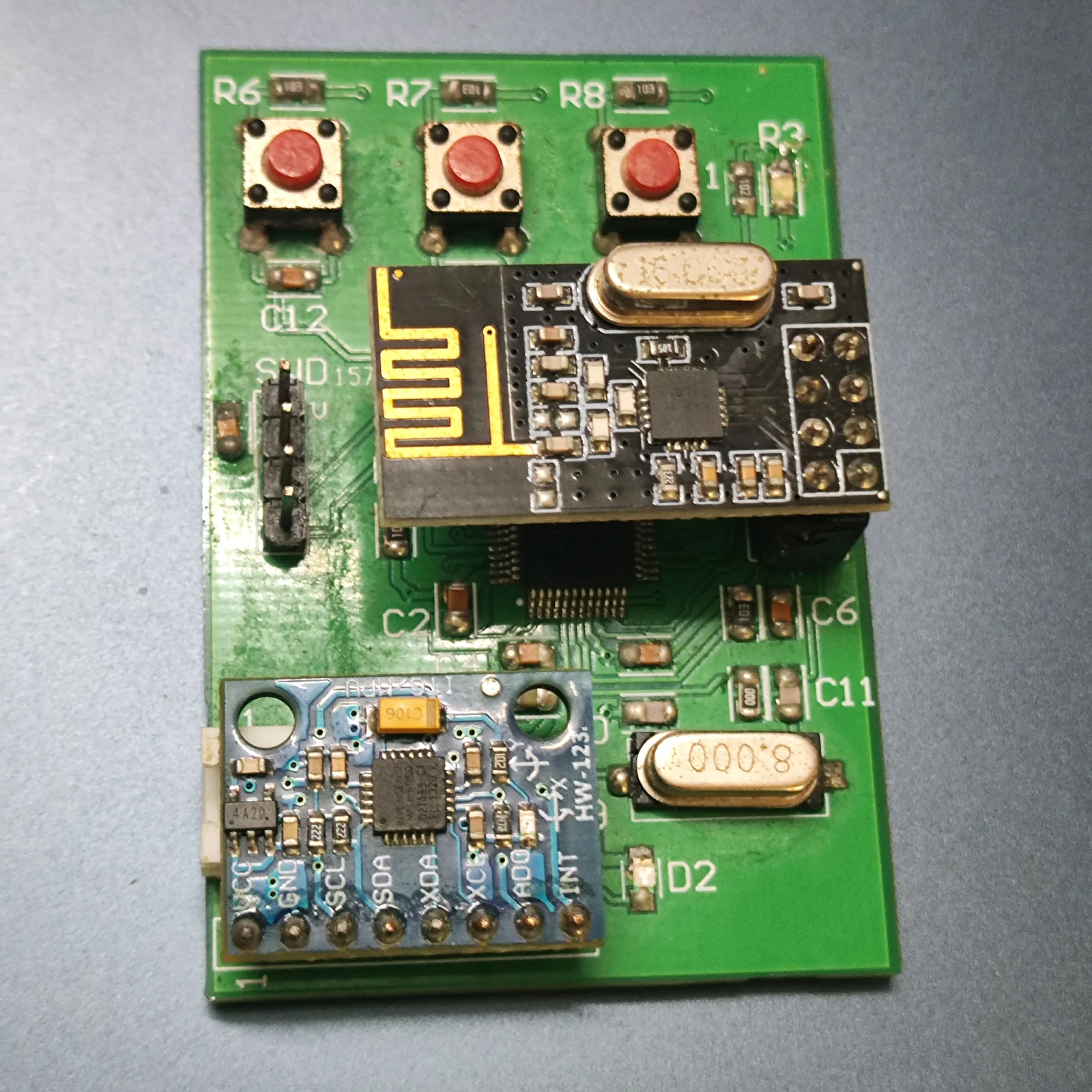
I built an Air Mouse using an STM32 microcontroller and an nRF24L01 wireless module. It connects to a computer and lets me control the mouse through gestures, turning hand movement into computer input.
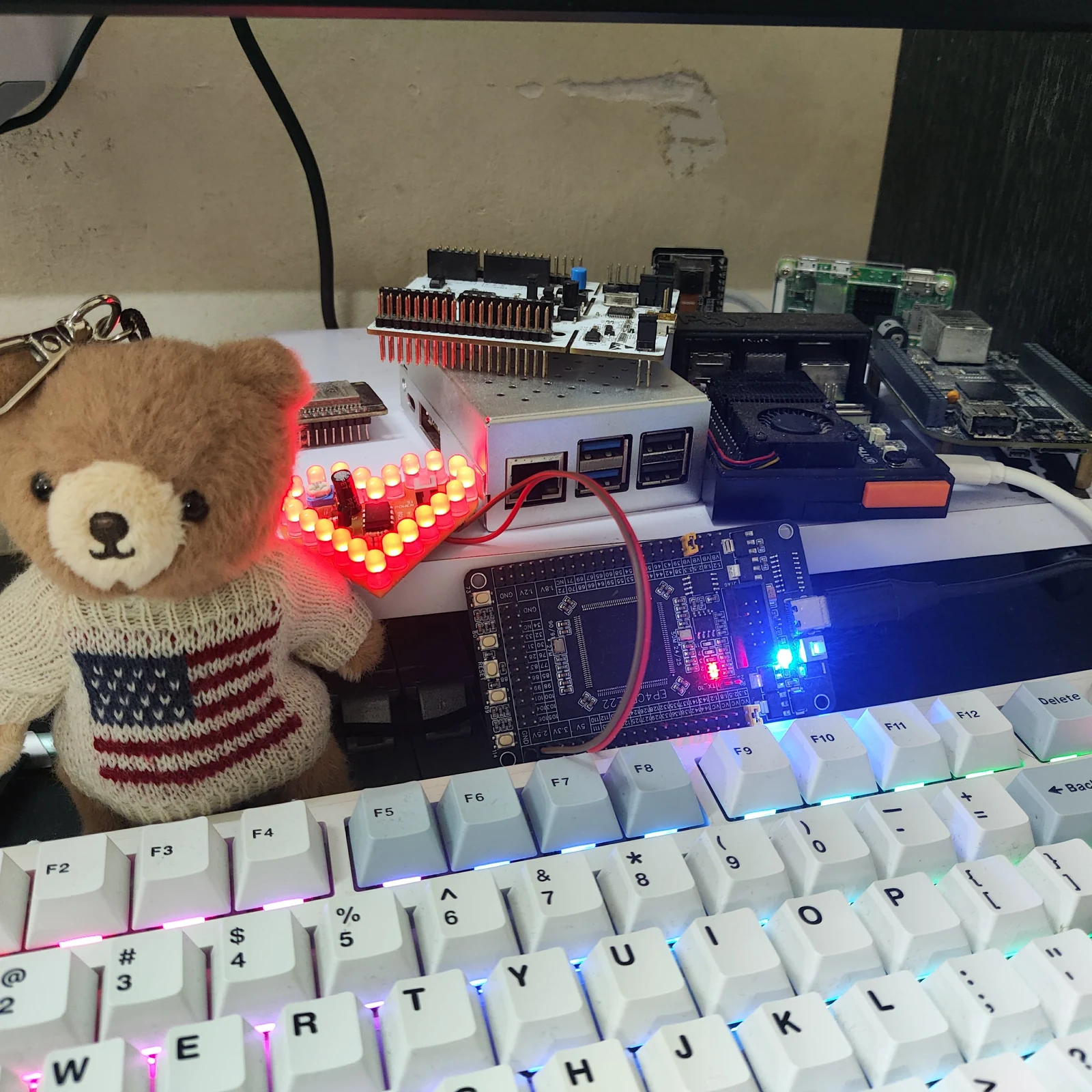
These four pages are a selection from a much larger body of embedded systems work. Alongside the Air Mouse, WLAN analysis with eBPF, SPAD photon counting, and real-time e-target processing, I have built and experimented with FPGA development boards, Raspberry Pi, BeagleBone, and other embedded platforms. The workbench photo reflects that broader hands-on practice: multiple boards, prototypes, and tools from projects that span firmware, digital hardware, Linux, networking, and circuit design.
Use the project navigation to move between the four projects documented here. They show different parts of the same practice, from building a physical input device and working close to the Linux packet path to circuit simulation and confidential real-time systems work.
From gestures to mouse input
The Air Mouse combines gesture sensing, STM32 firmware, and wireless communication through the nRF24L01. The goal is to control a computer by moving the device, without needing a desk surface for a conventional mouse.
On my workbench